Begin with the finished eating or drinking experience
A Himalayan origin can create interest, but origin alone does not make an ingredient suitable. Product teams should first define the role the material must play: flavour, aroma, colour, texture, nutrition, visual identity, or a combination of these. That decision narrows the form and quality questions quickly.
A whole flower that looks beautiful in a loose infusion may not behave well in a bottled beverage. A millet flour may contribute character and body but still needs trials in the buyer's actual process. Sensory review should therefore happen in the intended base, not only by smelling or tasting the raw sample.
- Describe the desired flavour, aroma, colour, and texture
- Test the ingredient in the real recipe and process
- Record acceptable natural variation
- Decide whether origin will appear in consumer-facing communication
Translate the concept into a food-safety and format brief
Once the application is clear, the material must be defined in practical terms. Cut size affects extraction and filtration. Moisture, foreign matter, and microbial expectations may affect storage and process control. Powders can behave differently from whole or cut material, while honey, pulp, and oils require their own handling conditions.
The buyer remains responsible for confirming suitability and regulatory compliance in the destination market. The supplier conversation should identify which lot checks, laboratory tests, and supporting documents are required before an order is approved, rather than assuming every food application needs the same package.
- Plant part and preparation
- Cut or particle-size expectation
- Relevant contaminant and microbiological parameters
- Packaging, shelf-life, and storage expectations
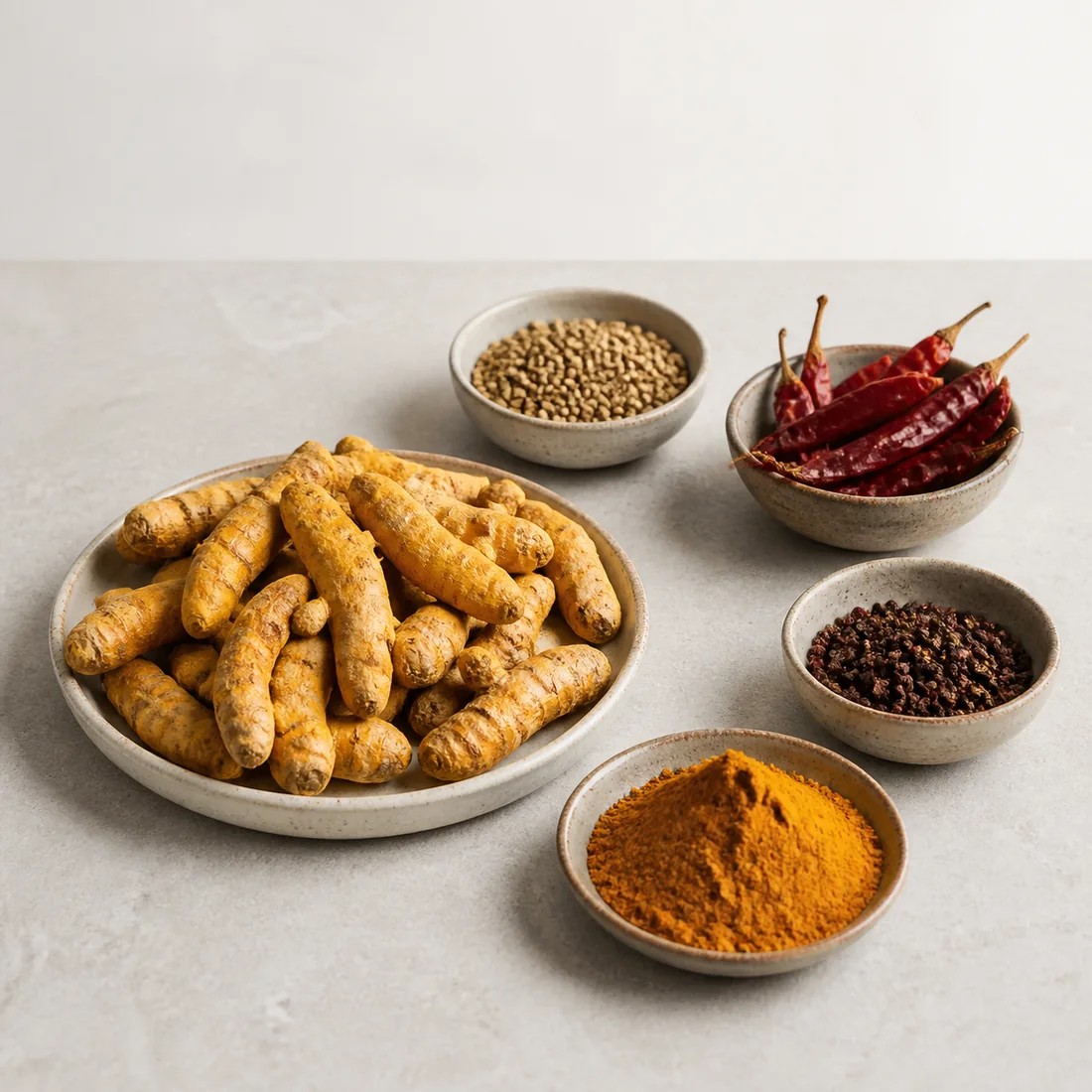
Explore spices, millets, pulses, and natural foods.
Review buyer-ready formats and starting points for a more precise ingredient brief.
Explore spices →Design continuity before the launch becomes dependent on it
A launch quantity can often be found more easily than a repeatable supply programme. Before an ingredient becomes central to a formulation, ask about harvest timing, likely annual demand, buffer stock, and acceptable alternatives in form or origin. This is especially important for seasonal flowers and region-specific materials.
Share forecasts as early as practical. They do not need to be perfect, but they help distinguish a one-time purchase from a supply relationship. When variability matters, retain approved samples and define what should trigger a fresh sensory or quality review.
- Expected annual volume and order frequency
- Launch date and replenishment lead time
- Approved variation or alternate format
- Retention-sample and reapproval plan
Three working takeaways.
- Select for the finished experience, not origin alone.
- Define the food-ready form and lot checks before comparing rates.
- Plan repeat supply before the ingredient becomes difficult to replace.
Product suitability, permitted use, specifications, testing, and documentation should be confirmed against the intended application, destination market, buyer quality system, and current lot.